If you want more space, more trees, and a quieter setting near the ski resort, Telluride Ski Ranches is one of the first places you should look. Many buyers are drawn to Mountain Village for access, but not everyone wants to live in the middle of the village core or in a condo setting. This guide will help you understand what Ski Ranches offers, what trade-offs come with the location, and what to verify before you buy. Let’s dive in.
Where Ski Ranches Sits
Telluride Ski Ranches is located on Turkey Creek Mesa along the western edge of Mountain Village in unincorporated San Miguel County. Community and local sources describe it as directly adjacent to Mountain Village and the National Forest, while the Town of Mountain Village has noted that Ski Ranches lies outside the town boundary. That location gives you a resort-adjacent setting with more privacy than you typically find in denser village neighborhoods.
County planning materials describe Ski Ranches as a 450-acre community with 206 privately owned parcels, 29 acres of common area, and 171 lots with homes as of 2022. The subdivision includes about seven miles of shared roadways and is accessed from Highway 145 by way of Fox Farm Road and Vance Creek Road. You can review those neighborhood details in the San Miguel County assessment materials.
What the Neighborhood Feels Like
Ski Ranches is best understood as a low-density homesite neighborhood rather than a village-style community. The road network is made up largely of loops and dead-end streets instead of through-traffic corridors, which supports a quieter, more residential feel. For many buyers, that layout is part of the appeal.
The official community website highlights the neighborhood’s wooded setting, large homesites, and close connection to both Mountain Village and Telluride. Because it sits next to the National Forest and outside the busiest resort core, Ski Ranches often attracts buyers who want year-round access without giving up breathing room. You can see the community overview on the Ski Ranches website.
Lot Sizes and Home Types
One of the biggest draws in Ski Ranches is land. The community site describes the neighborhood as offering homesites from 1 to 3 acres, and recent listing examples show parcels around 1.0 to 2.37 acres. That gives you more room than many in-town or village options, while still keeping you relatively close to the resort and regional amenities.
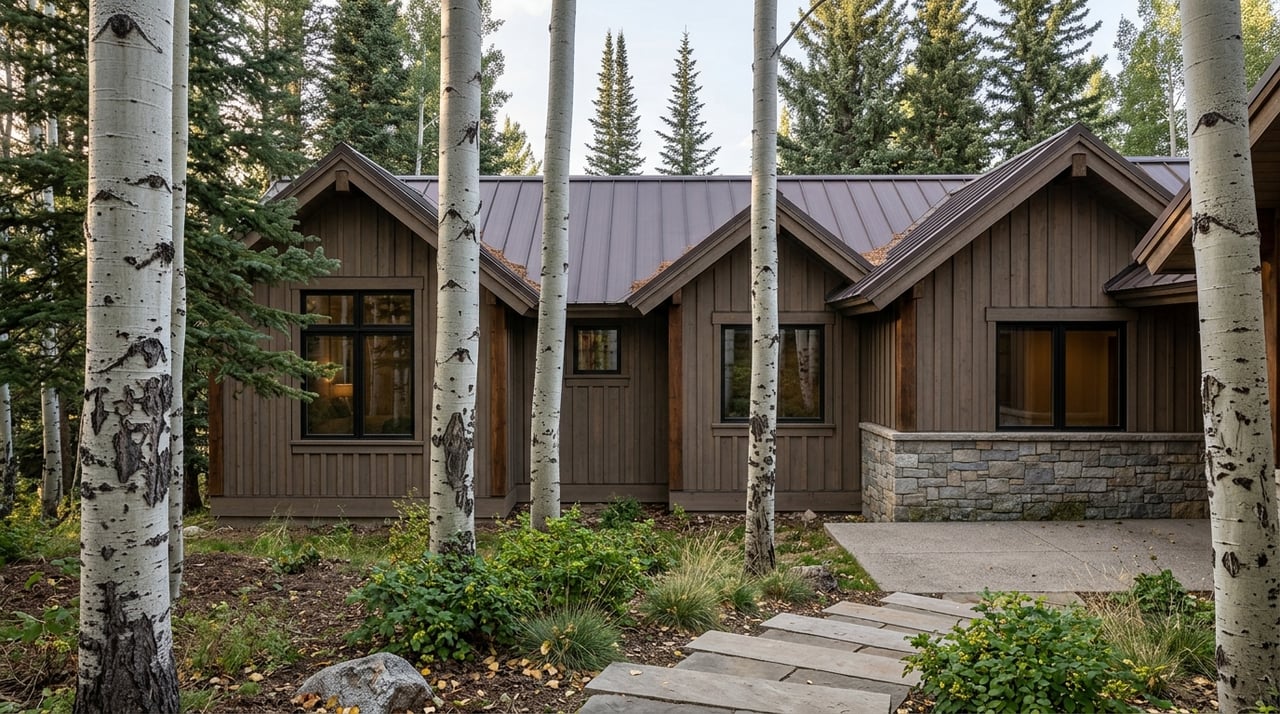
The neighborhood is also not architecturally uniform. County materials note that earlier homes often feature timber-frame, wood-siding, and log styles, while later construction includes stucco and more contemporary mountain designs. In practical terms, you will find a mix of older mountain homes, newer custom builds, and some vacant lots still available for future construction.
What Buyers Are Paying
Pricing in Ski Ranches depends heavily on whether you are buying land or a finished home. Based on recent listing and sale examples in the research, vacant or lightly improved lots have recently appeared around $550,000 for about 1.02 acres, $755,000 sold for 1.4 acres, $900,000 sold for 1.55 acres, $915,000 active for 1.44 acres, and $1.25 million active for 2.26 acres.
Finished homes are in a different range. Recent examples include a 1.43-acre home that sold for $2.675 million, a 1-acre home listed at $3.2 million, and a 2.37-acre home listed at $4.385 million. These examples are not a formal neighborhood median, but they do offer a useful snapshot of current market positioning.
If you are comparing land to existing homes, remember that vacant lots may still require septic and tap-fee planning. Finished homes usually come with more complete utility connections, but they can also carry higher ownership costs. For buyers weighing both paths, that difference matters early in the decision process.
Utilities and Infrastructure Matter Here
Ski Ranches is more established than raw land on the mesas, but it still asks more of an owner than in-town condominium living. County materials state that homes in the neighborhood receive municipal water, underground natural gas, and underground electrical service. That infrastructure is a meaningful plus for buyers who want a mountain setting without starting from scratch on basic services.
At the same time, road and driveway conditions deserve close review. The County notes that most roads are paved, a few are gravel, and some longer private driveways may not provide adequate turnaround space for first responders. If you are looking at a specific property, it is worth understanding exactly what is public, what is private, and what maintenance obligations come with the parcel.
HOA Rules and Design Review
Ski Ranches has a more hands-on ownership structure than many buyers expect at first glance. The association describes the neighborhood as a quiet, residential-only community, and its posted rules address property upkeep, snow storage, bear-proof trash handling, on-street parking during plowing, trailer and commercial vehicle storage, and similar day-to-day issues. The association also allows household pets and horses, with a stated limit of two horses per lot. You can review those items in the association resources.
The neighborhood also has an active Design Review and Property Committee. According to the community website, the committee reviews renovations, fences, tree removal, additions, new construction, and other exterior property changes, with meetings scheduled every third Monday. The association posts application procedures and a fee schedule on its design review page.
For buyers, the takeaway is simple: if you plan to remodel, build, clear trees, or make visible site changes, you should expect HOA review. That does not mean the process is a problem, but it does mean you should investigate it before closing rather than after.
HOA Costs Are Not Uniform
A common mistake is assuming every Ski Ranches property carries the same dues. Current listing pages cited in the research show annual HOA dues ranging from about $999 to $3,062, with several examples in the mid-$2,000s. That is a meaningful spread, so you will want parcel-specific numbers before making a final comparison.
It is also wise to ask about other ownership costs tied to the lot or home. Depending on the property, your budget may need to account for driveway upkeep, snow-related responsibilities, wildfire mitigation work, or tree management. In this neighborhood, total carrying cost matters just as much as purchase price.
Access to the Resort and Towns
Ski Ranches is not a ski-in/ski-out neighborhood. Instead, it functions more like a short-drive or shuttle-oriented location near Mountain Village and Telluride. For many buyers, that is the central trade-off: you give up immediate walkability, but gain more privacy, trees, and land.
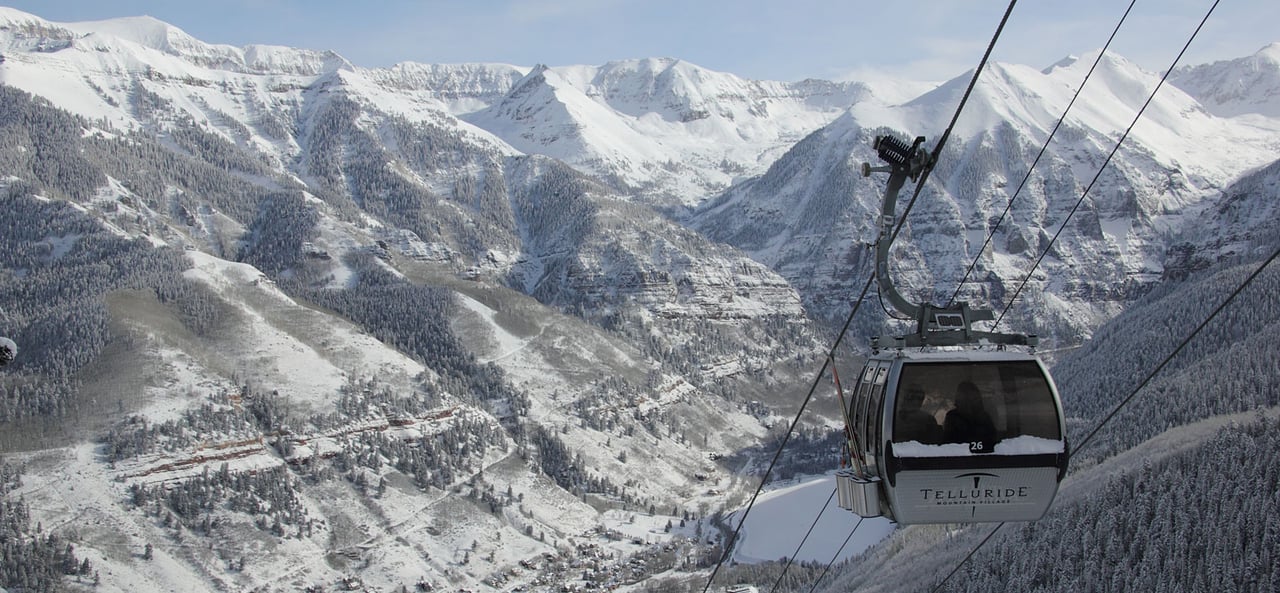
The transportation network in the Telluride region helps close that gap. According to Visit Telluride transportation FAQs, the free gondola connects Telluride and Mountain Village daily from 6:30 a.m. to midnight, with extended late-night hours on Fridays and Saturdays during peak periods. The same source notes free bus service during shoulder seasons when the gondola is closed, Dial-A-Ride service within Mountain Village, and the Galloping Goose bus loop in Telluride.
That means Ski Ranches can work well if you want ready access to skiing, dining, and events without living in the busiest resort environment. Your day-to-day experience is more car-oriented than in the village core, but still closely tied to the larger Telluride transportation system.
Wildfire and Site Planning
Mountain buyers should pay close attention to wildfire readiness, and Ski Ranches is no exception. The association highlights wildfire mitigation, fire-hydrant clearing, bear awareness, and seasonal water-use restrictions as ongoing community concerns. County materials also point to dense vegetation, hazard trees, and the importance of strong ingress and egress planning.
This does not make the neighborhood unusual for the area, but it does make due diligence more important. If you are buying a home, ask what mitigation work has already been completed. If you are buying land, ask what site preparation and vegetation management may be needed before construction.
Short-Term Rental Questions
If rental flexibility matters to you, verify the rules before you write an offer. The association states that owners who rent their property must follow San Miguel County rules and provide a management contact if they are not on site. The association also posts STR registration and policy documents within its resources section.
That means rental use should be treated as a property-specific due diligence issue, not an assumption. Before closing, confirm how county rules and association requirements apply to the parcel or home you are considering.
Who Ski Ranches Fits Best
Ski Ranches tends to appeal to buyers who want a mountain home with more land, more separation between neighbors, and a more private setting near the resort. It can be a strong fit if you value wooded surroundings, established utilities, and a short connection to Mountain Village and Telluride. It is especially compelling for buyers who want a single-family home environment rather than condo living.
It may be less ideal if your top priority is walking to lifts, restaurants, and shops every day. In that case, the village core or other more centrally located options may suit you better. The right choice depends on how you balance privacy, convenience, lot size, and maintenance.
Key Questions Before You Buy
Before you move forward on a Ski Ranches property, make sure you can clearly answer a few basics:
- How large is the lot, and how usable is it?
- What are the annual HOA dues for this specific parcel?
- Are there design review requirements for your planned improvements?
- What road, driveway, and snow-removal responsibilities come with the property?
- What wildfire mitigation or tree work may be needed?
- If you may rent the property, what county and HOA rules apply?
- If you are buying land, what utility, septic, and tap-fee planning remains?
These are the kinds of details that shape ownership far more than a listing headline does.
If you are considering Telluride Ski Ranches, local guidance can make a real difference, especially when you are comparing homesites, reviewing HOA structure, or weighing privacy against proximity. For tailored advice on Ski Ranches and other Mountain Village area opportunities, connect with Jim Lucarelli to request a confidential consultation.
FAQs
What is Telluride Ski Ranches in Mountain Village?
- Telluride Ski Ranches is a residential subdivision on Turkey Creek Mesa along the western edge of Mountain Village in unincorporated San Miguel County, adjacent to Mountain Village and the National Forest.
Are Telluride Ski Ranches homes ski-in/ski-out?
- No. Ski Ranches is generally better understood as a short-drive or shuttle-oriented neighborhood rather than a ski-in/ski-out location.
How large are lots in Telluride Ski Ranches?
- The official community site describes homesites as roughly 1 to 3 acres, and recent listing examples in the research show parcels around 1.0 to 2.37 acres.
What types of homes are in Telluride Ski Ranches?
- The neighborhood includes a mix of older timber-frame, wood-sided, and log-style homes, newer custom homes, and some vacant lots for future construction.
Does Telluride Ski Ranches have an HOA?
- Yes. The association has published community rules, annual dues that vary by property, and a design review process for many exterior changes and building projects.
Can you have horses in Telluride Ski Ranches?
- Yes. The association resources state that horses are allowed, with a limit of two horses per lot.
Can you rent out a home in Telluride Ski Ranches?
- Rentals must follow San Miguel County rules, and the association states that owners who rent must provide a management contact if they are not on site.
What utilities are available in Telluride Ski Ranches?
- County materials state that homes in the neighborhood receive municipal water, underground natural gas, and underground electrical service.

Jim Lucarelli is a seasoned Colorado real estate agent with over 34 years of experience, primarily in the Telluride market. Formerly owner of Real Estate Affiliates of Telluride, he joined Compass in 2020, leveraging their advanced resources. A four-time past president of the Telluride Association of REALTORS® and three-time REALTOR® of the Year, Jim has deep market knowledge, especially in ranch properties. He's also experienced in construction management and actively involved in the Telluride community, serving on several boards.
[email protected] | Office: (970) 728-0213 | Mobile: (970) 708-2255
For more timely updates follow us on Instagram or Facebook at @lucarelli.telluridelifestyle and Lucarelli.TellurideLifestyle.
For more timely updates follow us on
INSTAGRAM | FACEBOOK | LINKEDIN | TIKTOK